Lose fat, keep the muscle
Eat less and the scale goes down. But the scale doesn't show what you lost. Diet alone takes some muscle with the fat. Lifting while you diet changes what comes off.
Lift 2 to 3 times a week with heavy weights, eat protein toward 2.4 g per kilo, and keep the deficit to roughly 500 calories a day or less, so the weight that comes off is fat.

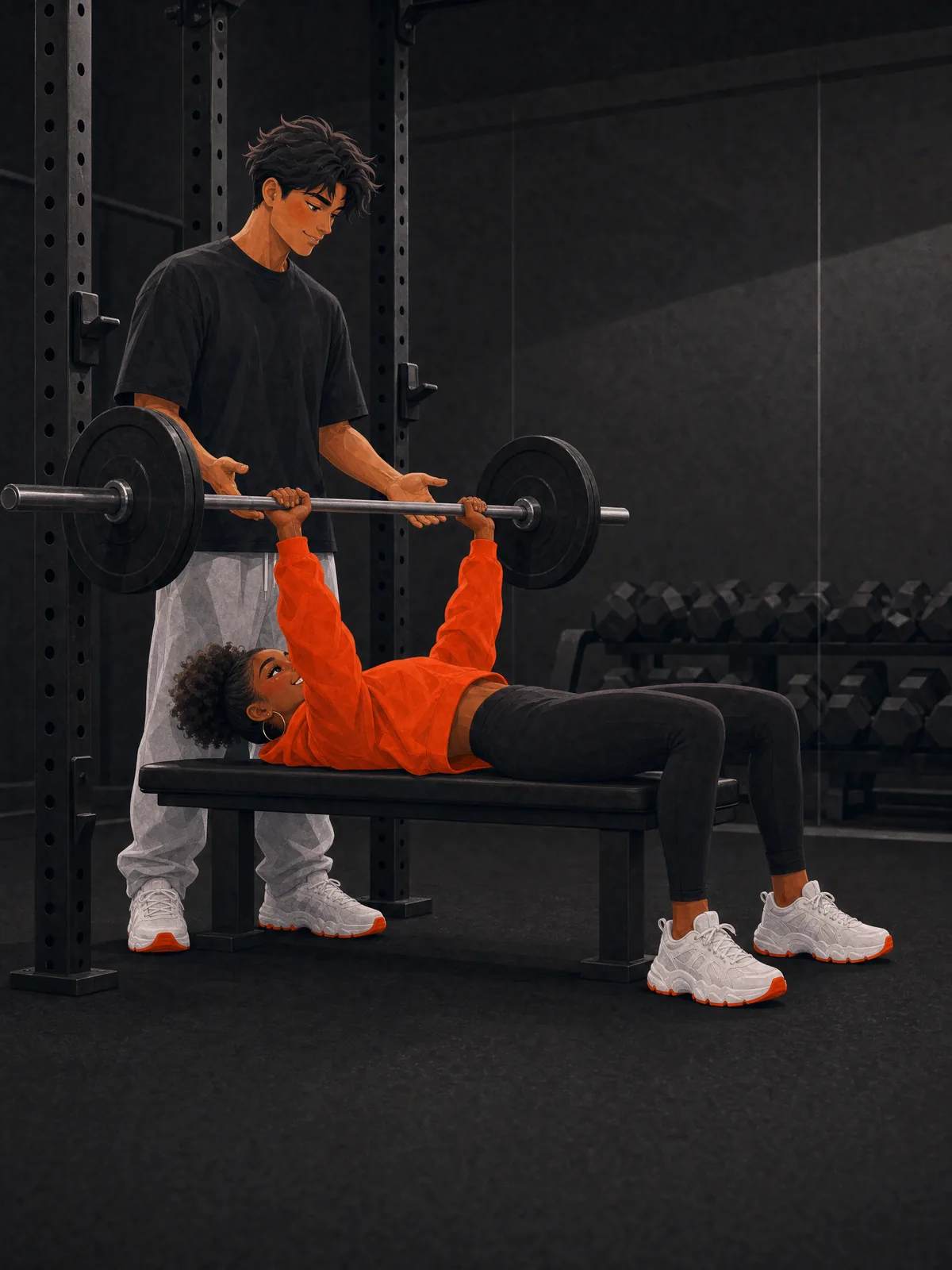
The scale is only half the story
Weight is fat, muscle, water and everything else put together. When you cut calories, your body pulls from all of it.
That's how people end up lighter but softer, weaker and more tired. They lost weight. They just lost some of the wrong kind.
Lifting tells your body what to keep
A 2025 review of 25 trials compared dieting alone with dieting plus strength training. Total weight loss was about the same. What was lost was different.
The lifting groups kept more of their muscle and lost more fat. They also got stronger, while dieting. In older adults, another review found strength training prevented around 93% of the muscle loss a diet would otherwise cause.
The message to your body: this muscle is being used, keep it.
Don't cut too hard
A deeper deficit feels faster, but it costs more. Research on dieting while lifting found that a deficit of around 500 calories a day was the point where muscle gains stopped. If holding on to muscle is the goal, going much deeper than that works against you.
A steady deficit you can live with beats a crash diet that burns through muscle and willpower.
The plan in four lines
- Lift 2 to 3 times a week, and keep the weights heavy
- Eat protein on the high side, up to 2.4 g per kilo
- Keep your deficit moderate, roughly 500 calories a day or less
- Judge by the mirror, your waist and your lifts, not only the scale
Why your lifts are the best sign
On a diet, holding your strength is the clearest sign you're keeping muscle. If your lifts stay steady while your waist shrinks, the plan is working.
Don't expect new personal bests during a cut. Holding your numbers is the win.
The bottom line
Dieting decides how much you lose. Lifting decides what you lose. Do both, and the weight that comes off is fat.
Sources
- 1.Binmahfoz et al. 2025, resistance exercise during dietary weight loss (meta-analysis)
- 2.Sardeli et al. 2018, resistance training and muscle loss during caloric restriction in older adults (meta-analysis)
- 3.Murphy et al. 2021, energy deficiency and resistance training gains (meta-regression)
- 4.Longland et al. 2016, higher vs lower protein during an energy deficit (RCT)