Protein: how much, and why a cut needs more
Training tells your muscles to grow. Protein is what they're built from. Most people training hard don't get enough, and on a diet the gap gets bigger.
Aim for about 1.6 g of protein per kilo of body weight a day to build muscle, around 130 g for someone who weighs 80 kg, and go higher on a cut, where the trial behind it used 2.4 g/kg.

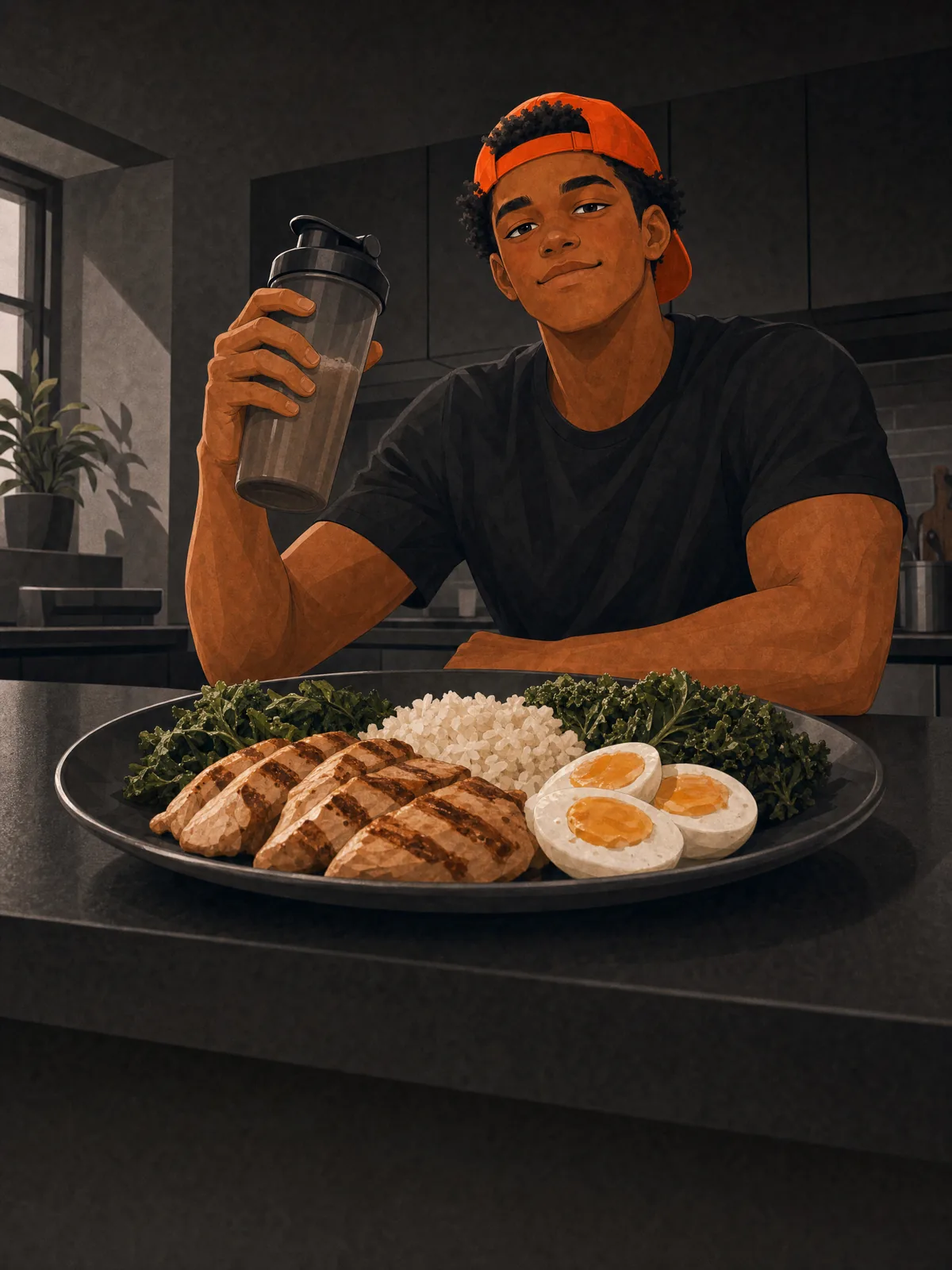
The everyday number
If you're lifting and want to build muscle, aim for about 1.6 grams of protein per kilo of body weight per day.
That comes from the largest analysis of protein and strength training, covering 49 studies and almost 1,900 people. Up to about 1.6 g/kg, more protein meant more muscle. Past that, the extra gains flattened out.
For someone who weighs 80 kg, that's about 130 grams a day.
Why a cut needs more
When you eat less than you burn, your body looks for energy wherever it can find it, and muscle is on the menu. More protein makes muscle a worse deal.
In a trial at McMaster University, two groups ate 40% fewer calories than they needed and trained hard for four weeks. One ate 2.4 g/kg of protein a day, the other 1.2 g/kg.
The high-protein group gained 1.2 kg of muscle and lost 4.8 kg of fat. The low-protein group gained almost no muscle and lost less fat. Same deficit, same training, different body.
On a cut, go higher than your everyday number. The trial used 2.4 g/kg. For the 80 kg person, that's around 190 grams.
How to actually hit it
Splitting it across the day makes it realistic. Four meals of 30 to 40 grams covers most people.
- 150 g chicken breast: about 45 g
- 250 g Greek yogurt or kvarg: about 25 g
- 3 eggs: about 18 g
- 150 g salmon: about 30 g
- 1 scoop of whey: about 20 to 25 g
Food first. Protein powder is a shortcut when life gets busy, not a requirement.
Watch out for
If you have kidney disease or another medical condition that affects your diet, talk to your doctor before raising your protein intake. For healthy adults, these amounts are well studied.
The bottom line
Around 1.6 g per kilo when you're building. More when you're cutting. Spread it across your meals and the number stops feeling big.