How to add weight without getting hurt
Adding weight is how you get stronger. Adding it too fast is how you get hurt, or stuck. The fix is a rule lifters have trusted for over a hundred years, and it takes the guessing out of every session.
Stay in a rep range such as 8 to 12 until every working set reaches the top, then add the smallest jump the equipment allows, and never more than 10% to a lift in one week.

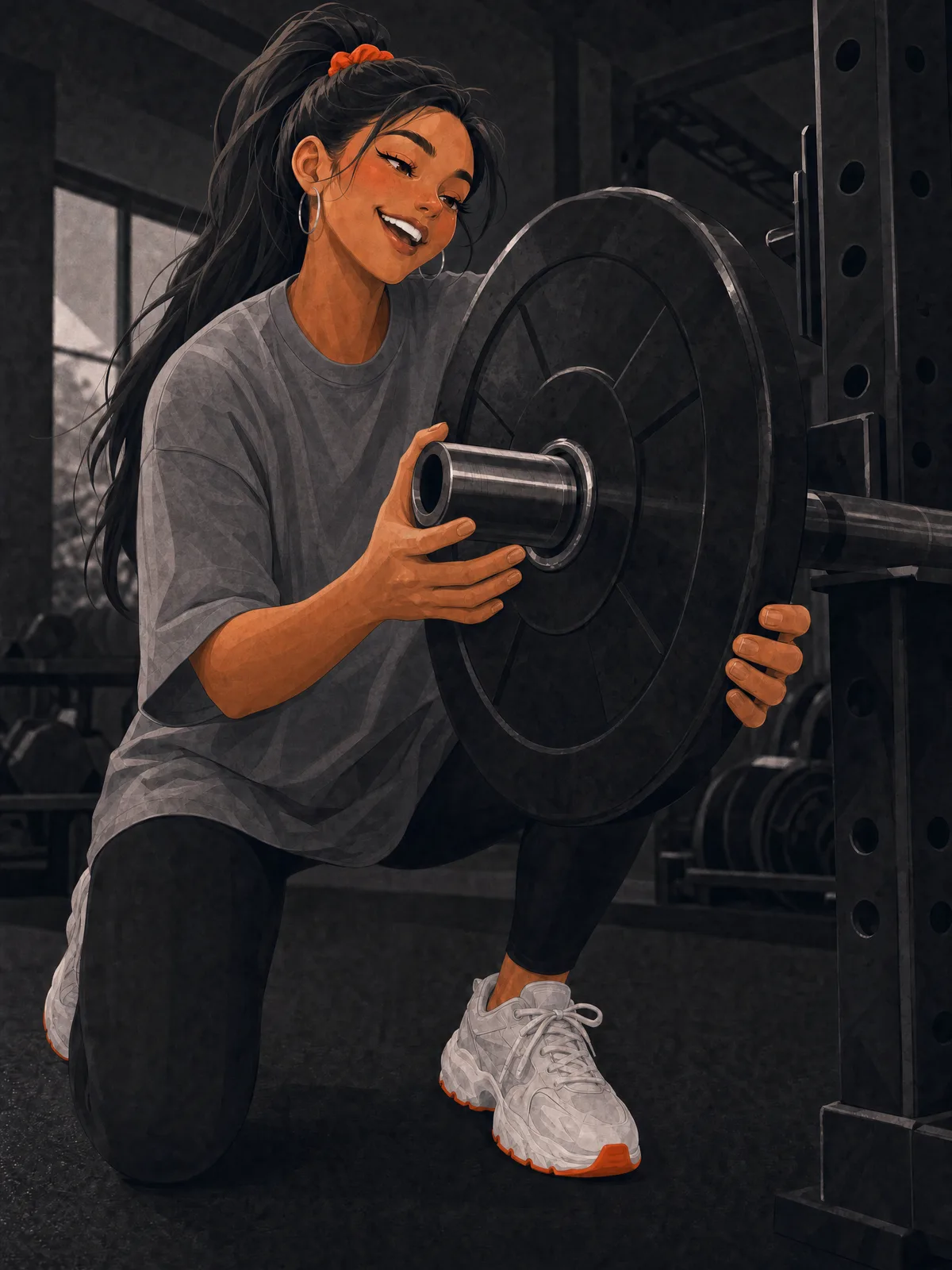
Earn the weight with reps first
The method is called double progression. You pick a rep range, say 8 to 12, and a weight you can lift for 8 clean reps.
Each session, you try to add a rep. When every working set hits 12, the weight goes up and you drop back to 8. Then you climb again.
Reps first, weight second. Your body gets time to adapt to a load before you ask it for more.
How big the jump should be
Small. Smaller than your ego wants.
- Squats, deadlifts, leg press: add 2.5 kg
- Bench press, rows, overhead press: add 1.25 to 2.5 kg
- Curls, raises, machine work: add 1 to 2 kg, or one pin on the stack
As a rule of thumb, never add more than 10% to a lift in a single week. If the next plate is a bigger jump than that, stay at the current weight and push the reps higher first.
Fast at the start, slower later
In your first months, you can often add weight almost every session. That's normal. Your body is learning fast.
After that, progress moves to week by week, then month by month. It doesn't mean you've stopped improving. It means you're getting closer to what your body can do, and every step up is worth more.
Form decides if the rep counts
A rep only counts if it looks like your first rep. If your back rounds, your hips shoot up or you need a bounce to finish, that rep doesn't count toward moving up in weight.
Ugly reps at a heavier weight don't build more strength. They add the risk you're trying to avoid.
Do this / Watch out for
Do this:
- Stay in one rep range until you own the top of it
- Add the smallest jump the equipment allows
- Log every set so you know exactly where you are
Watch out for:
- Muscle burn and fatigue are part of training. Sharp pain or pain in a joint is not. Stop the set and don't load through it.
- Jumping weight because you felt strong once. Earn it across all your sets.
The bottom line
Add reps until the range is yours, then add the smallest weight step you can. Slow and steady progress is the kind that lasts.